Tuesday, January 30, 2024

People’s Catholic Seminary Forum Part 2: All Disciples, All Missionaries- Feb.6, 2024, 1pm


People’s Catholic Seminary Forum Presents: Growing Together in Dialogue, Discernment and Decisions as the Synodal Church: 

Next Steps for Synod in 2024 


Part 2: All Disciples, All Missionaries- Women in the Church-Feb.6, 2024, 1pm-2pm 


Facilitators: Bridget Mary Meehan and Joan Pesce


Welcome and Opening Prayer: Joan Pesce


Highlights from Synthesis Report in Part 1: Bridget Mary Meehan


1. The Synod affirms that the Church is mission.” Each Christian is a mission on this earth.

2. The exercise of co-responsibility is essential for synodality and is necessary at all levels of the Church.

3. Jesus welcomed women as disciples, and entrusted the “announcement of the Resurrection on Easter to Mary Magdalene.”

4. Women are called to co-responsibility at every level of the Church’s life.

5. “Clericalism, a chauvinist mentality and inappropriate expressions of authority continue to scar the face of the Church.”

6. Avoid talking about women as an issue or a problem. View women as protagonists without subordination, exclusion and competition.

7. “How can the Church include more women in existing roles and ministries?

8. “If new ministries are required, who should discern these, at what levels and in what ways?

9. Different positions have been expressed regarding women’s access to the diaconal ministry.

10. For some, “access for women in the diaconate would restore the practices of the Early Church.”

11. For others, it would be “a sign of the times, faithful to Tradition” and bring “new energy” to the Church.”

12. Theological and pastoral research on the access of women to the diaconate should be continued. If possible, results should be presented to next Assembly.

13. Local churches are encouraged to listen, accompany and care for “the most marginalized women in their social contexts.”

14. Questions of labor injustice for women in consecrated life, treated as “cheap labour” should be addressed.

15. Women should “be integrated into seminary teaching and training programs to foster better formation for ordained ministry.”

16. Liturgical texts and Church documents need to “include a range of words, images and narratives” derived from “women’s experience.”

17. “Lay associations, ecclesial movements and new communities are a precious sign of the maturation of the co-responsibility of all the baptized.”

18. The promotion of synodality requires councils and advisory bodies with representatives of lay associations, ecclesial movements and new communities.

19. The discussion of priestly celibacy “requires further consideration.”

20. Deeper study of the theology of the permanent diaconate will shed light on the question of the access of women to the diaconate.


Questions for Reflection: Joan Pesce


l 1. The Church, the People of God, are a mission and each person is a mission. How does this awareness enlarge your view of your co-responsibility for being the Presence of Christ in the world?

How does this perspective change the view of ”the hierarchy as Church?”


2. How have you implemented co-equal roles and co-partnerships in your emerging church communities?


3. As a major part of your experience of creating inclusive church communities, please share the roles and ministries you have developed and implemented for women in your church community. Your thoughts, comments and experiences are needed to include in our final report and recommendations to the Vatican in May 2024.


4. In the Highlights presented, which point(s) speak(s) to you most powerfully? Please share your thoughts.r

5 What inspires and energizes you the most in moving forward in the Synodal process of change in the Church of the future?


Time for Prayerful Dialogue and Discernment :


 Proposals for Decisions on Next Steps for Report to Vatican in preparation for Synod in 2024


Summary Report: Bridget Mary and Joan Pesce 


Saturday, January 13, 2024

PCS Forum Presents: Next Steps for Synod in 2024 Part 1: The Face of the Synodal Church - January 16, 2024 1pm


People’s Catholic Seminary Forum Presents: Growing Together in Dialogue, Discernment and Decisions as the Synodal Church:

Next Steps for Synod in 2024


Part 1: The Face of the Synodal Church- January 16, 2024, 1pm-2pm and 7:30PM-8:30PM ET


Facilitators: Bridget Mary Meehan and Joan Pesce


Welcome and Opening Prayer: Joan Pesce


Highlights from Synthesis Report in Part 1 of Synthesis Report: Bridget Mary Meehan

Section 1: The Face of the Synodal Church - Highlights- Bridget Mary  
 
1. We are all brothers and sisters in Christ and co-responsible for mission of Church with “a ,genuine equality of dignity and common responsibility for mission according to the vocation of each.“

2. The Church itself is a “conversation” within itself and with the world, walking side by side with every human being in the style of Jesus.”

3. Christian communities are to join “other religions, convictions and cultures in mutual learning, service to those experiencing poverty, care for our common home and theological research. “

4. Synodality involves “reciprocal listening, dialogue, community discernment and creation of consensus” that renders Christ present in decisions” according to “responsibilities.”

5. Synodality offers “alternative way of being and acting for our times integrating a diversity of perspectives.”

6. Synodality integrates the contributions of theology, the humanities, social sciences as well as other models of ecclesial discernment of different spiritual traditions, ancient and recent.


QUESTIONS for Reflection on The Face of the Synodal Church- Joan 


  In your experience of circular leadership in your local church community, what have

been the benefits of this process? What have been the learning experiences?


 What challenges do you see to the ongoing development of the synodal

process in the Church?


 How do you move forward as a synodal church both in your local church community

and in the worldwide Church?


Section 2: Eucharist: Highlights- Bridget Mary 


7. “From the Eucharist we learn to articulate unity and diversity, “unity of sacramental mystery and a variety of liturgical traditions, unity of celebration and diversity of vocations, charisms and ministries. “

8. This means making “liturgical language more accessible” and “embodied in the diversity of cultures.”

9. The preferential option for the poor and those at the margins is rooted in the example of Jesus who “befriended people in poverty, shared a table with them and denounced the causes of poverty.”

16. The issue of Eucharistic hospitality is of “particular importance to inter-church couples and raises the need for a broader reflection on inter-church marriages.”

Questions: for Reflection on EUCHARIST- Joan


How do we promote unity and diversity in Eucharistic hospitality?


What challenges do you see for the Church in implementing understandable and inclusive language in the Liturgy and Rites?  


How do you practice Eucharistic hospitality in your ministry?


Section 3: Social Justice and Ministry- Highlights: Bridget Mary

10. The Church’s commitment must address the causes of poverty and exclusion. This includes actions to protect the rights of those who are excluded, and may involve denunciation of injustices. This means “listening to their demands and points of view, and utilizing their own words. “

11. The Church’s social justice teachings are not well-known. It is a requirement of faith, “not an optional extra. This is especially true for candidates for ordained ministry and consecrated life.”

12. The diaconal ministry should “promote a stronger orientation towards service to those who are poor.”

13. Living the Church’s mission in multicultural and multi-religious contexts requires “taking of one’s shoes to “cross the threshold towards encounter” and “respect for a sacred space, on an equal footing.”

14. The Church encourages interreligious dialogue and is aware that “the Spirit can speak through women and men of every religion, belief and culture.”

15. To address different understandings of evangelization, new paradigms are needed for pastoral engagement with indigenous peoples, that include their participation in decision -making processes at all levels.


17. It is proposed that Christians of other Churches and ecclesial traditions participate in Catholic synodal processes at all levels, including an ‘ecumenical Synod on common mission in the contemporary world. “

18. Each local Church is encouraged “to equip itself with suitable people trained to facilitate and accompany processes of ecclesial discernment.”


Questions for Reflection: Social Justice and Ministry- Joan

How can you expand awareness of the Church’s social doctrine in your local

church community?


How will you go about promoting ministry to the poor and those at the margins of

society in your local church community? How can this be done in the greater Church?


What challenges do you see in moving forward in joining with other churches and traditions in synodal processes at all levels?


NEXT Steps: Time for Prayerful Dialogue and Discernment : Bridget Mary
Please share these highlights on the Synthesis document with your communities and companions on the journey in a Synodal Church that we all belong to and participate in. 


Proposals for Decisions on Next Steps for Report to Vatican in preparation for Synod in 2024
You are invited to share your ideas for next steps forward for incorporation in the Summary Report that we will post on Vatican site in preparation for the October 2024 Synodal meeting in Rome. The Summary Report will be prepared by Bridget Mary and Joan Pesce and shared with you.

Join us on Feb. 6th for reflection and discussion at our next PCS Forum on Part 2 of THE  Synodal Synthesis Report - 
1:00 PM ET 7:30PM ET.


Tuesday, January 9, 2024

Please register for People’s Catholic Seminary Forum: Growing Together in Dialogue, Discernment and Decisions as the Synodal Church: Next Steps for Synod in 2024, Part 1


Please register for People’s Catholic Seminary Forum: Growing Together in Dialogue, Discernment and Decisions as the Synodal Church: Next Steps for Synod in 2024


Click the link below to register for the 1pm EST Forum:


https://us02web.zoom.us/meeting/register/tZcodOCgrDgtGtRQZWmh5qrQrvND1YwTDyif


Part 1: The Face of the Synodal Church- January 16, 2024, 1pm-2pm and 7:30PM-8:30PM ET

Facilitators: Bridget Mary Meehan and Joan Pesce


Thursday, December 21, 2023

Join the Conversation:More signs of hope from the synod synthesis report By Thomas Groome. Response by Bridget Mary Meehan

 Join us  in participating in a conversation about creating a Synodal Church for Everyone in our upcoming  3 session Forum: See information at end of article below.


Please let us know if you are attending: by sending a response to People’s Catholic Seminary at:

peoplescatholicseminary@gmail.com


“More signs of hope from the synod synthesis report” by Thomas Groome 

My Response:

Kudos to Thomas Groome for digging into the gems of hope within the Synodal document.

As we engage in this ongoing Synodal journey, may all our voices be heard including Roman Catholic Women Priests who have been creating a  spiritual home for everyone by welcoming everyone to celebrate sacraments including those who are most marginalized. Pope Francis’s affirmation:”Todos, Todos,” has been our vision for the past 21 years since 7  courageous Catholic women were ordained on the Danube . Let’s hope Francis’s words of welcome includes all of us!

Article by Thomas Groome

“More signs of hope from the synod synthesis report “ National Catholic Reporter

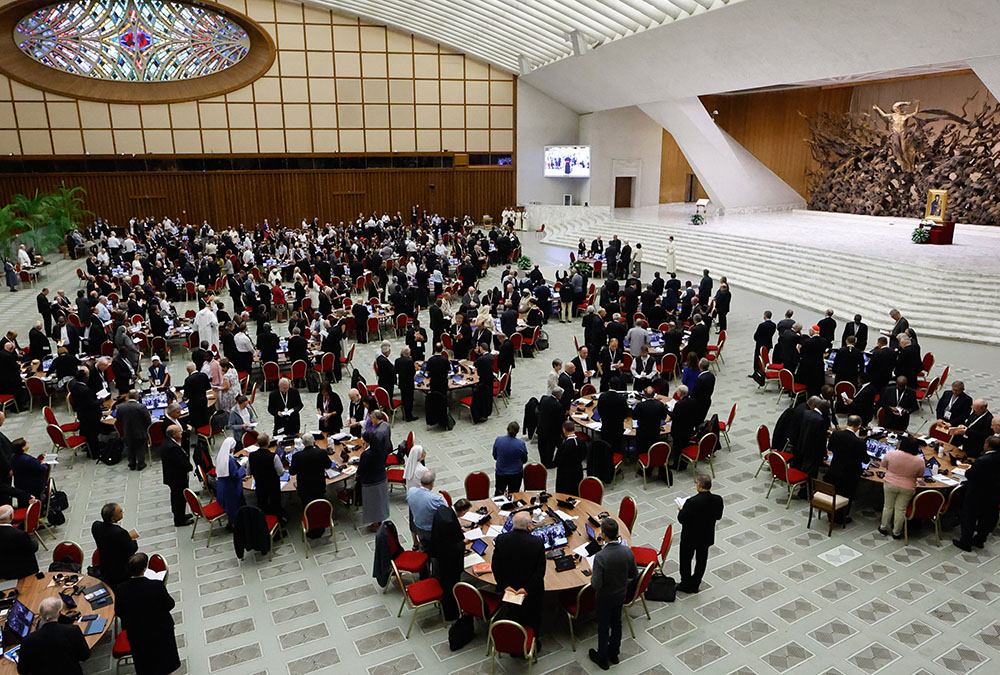
Members of the assembly of the Synod of Bishops pray with Pope Francis before a working session in the Vatican's Paul VI Audience Hall Oct. 16. (CNS/Lola Gomez)

Members of the assembly of the Synod of Bishops pray with Pope Francis before a working session in the Vatican's Paul VI Audience Hall Oct. 16. (CNS/Lola Gomez)

BY THOMAS GROOME

View Author Profile

Join the Conversation

Send your thoughts to Letters to the EditorLearn more

In a recent and typically fine essay, Tom Reese elaborated on "15 hidden gems in the synod on synodality report." With this, Reese was inviting us to a second and more in-depth reading after the initial and mixed responses to "A Synodal Church in Mission," the synthesis report issued promptly after the close of the XVI Ordinary General Assembly of the Synod of Bishops in Rome Oct 4-29.

Note first that most see the move toward synodality as a renewed impetus for the vision of the Second Vatican Council (1962-65) as epitomized in Lumen Gentium, the Dogmatic Constitution on the Church. There, the council portrays the church as first a mystery and then "the people of God," before reflecting on its "hierarchical structure" — in a sense, turning the church upside down from its hierarchical pyramid. 

Synodality now is the way forward that can engage the whole people of God as active agents of their faith, moving along together.

Yet there was serious disappointment with the synod's synthesis report on at least two crucial fronts: It did not endorse the ordination of women to the diaconate, and it made no explicit mention of full inclusion in the church for LGBTQ+ people.

Synodality now is the way forward that can engage the whole people of God as active agents of their faith, moving along together.

TWEET THIS

As a sign of hope, however, the report notes that while there was opposition, there was also a strong sentiment that admitting women to the diaconate would "restore the practice of the Early Church" and thus would be "faithful to the tradition." This prompts the reasonable cry of "What are we waiting for?"

Likewise, while it does not use the term LGBTQ+, the synthesis report repeatedly uses the word "welcome" as defining the imperative posture of the church toward all peoples. 

Pope Francis' constant chant of "todos" is generally heard as highlighting a particular welcome for LGBTQ+ people. In his sermon on Sunday, Oct. 29, the day after this synod gathering closed, Francis called for — as he has so often — "a church with open doors that is a haven of mercy" for all.

There is also fresh hope for the church to develop a truly "catholic" (inclusive) stance toward its LGBTQ+ members in the repeated insistence in the synthesis report that, when addressing such social issues, theology needs to be in dialogue with the sciences. 

For example: "It is important to deepen the dialogue between the human sciences, especially psychology and theology, for an understanding of human experience that does not merely situate these approaches side by side but integrates them into a more mature synthesis." 

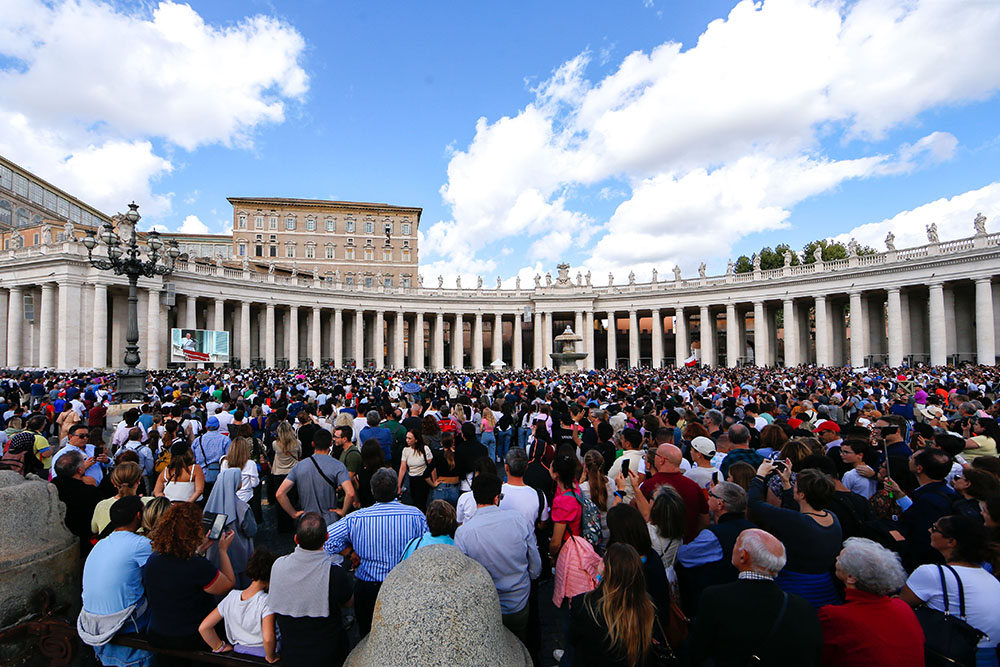
Visitors gather in St. Peter's Square at the Vatican to pray the Angelus with Pope Francis Oct. 29. (CNS/Lola Gomez)

Visitors gather in St. Peter's Square at the Vatican to pray the Angelus with Pope Francis Oct. 29. (CNS/Lola Gomez)

Dialogue with the sciences, then, will help the church recognize the wide spectrum and the natural givenness of sexual orientation — rather than by choice — with all equally reflecting the image and likeness of God.

The Reese essay, however, invites us to look beyond such critiques of the synthesis report and to highlight the many positive aspects of the document that could be overlooked or skewed by its shortcomings. He found 15 "hidden gems" in all; I would like to elaborate on a few of them and add a few more.

Relocating priestly formation

The synod report often blames the current priesthood's "culture of clericalism" for many of its woes. For example: "Clericalism, a chauvinist mentality and inappropriate expression of authority continues to scar the face of the Church and damage its communion." 

For this reason, "a thorough review of formation for ordained ministry in view of the missionary and synodal dimensions of the Church is called for," the report says.

The synthesis proposes that the church move the education of future priests out of the all-male environment of the traditional seminary and relocate to a more inclusive context that would engage "the whole ecclesial community," including women faculty.

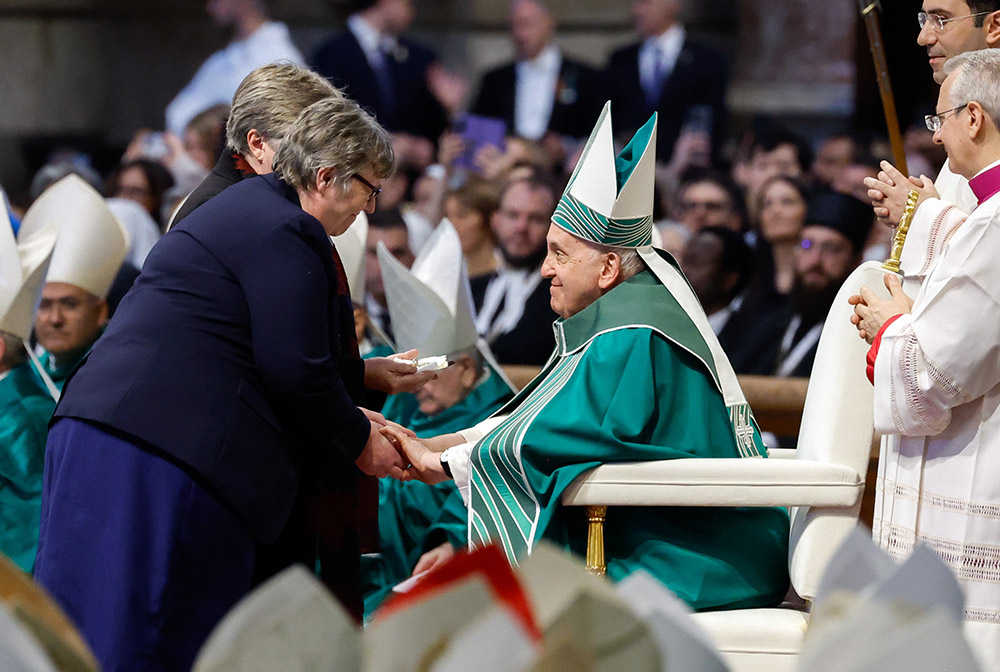
Pope Francis accepts the offertory gifts as he celebrates Mass marking the end of the first session of the assembly of the Synod of Bishops on synodality in St. Peter’s Basilica at the Vatican Oct. 29. (CNS/Lola Gomez)

Pope Francis accepts the offertory gifts as he celebrates Mass marking the end of the first session of the assembly of the Synod of Bishops on synodality in St. Peter’s Basilica at the Vatican Oct. 29. (CNS/Lola Gomez)

More people to preach

This hopeful nugget is cast within what is a present ecclesial reality, namely that "pastoral practice at the parish, diocesan, and, recently, even universal levels, increasingly entrusts lay people with tasks and ministries within the Church itself." 

Wanting to encourage such breaking open of formal functions of ministry to the nonordained, the report recommends "expanding responsibilities assigned to the existing ministry of lector" to "become a fuller ministry of the Word of God, which in appropriate contexts could also include preaching." 

Taking preaching out of the exclusive hands of the ordained and opening it to laypeople with the requisite gift and theological background would surely expand the diversity of perspectives and spiritual resources represented in the preaching of our parishes. 

Optional celibacy for priesthood

On this issue, the synod's lack of courage ranks with its avoidance on women in the diaconate, designating both as requiring "further study." Yet it reflects some hope that this is still an open question.

The report asks whether "for priestly ministry should [celibacy] necessarily translate into a disciplinary obligation in the Latin Church." The latter note recognizes implicitly that Eastern Orthodox Catholic Churches — as well as the Orthodox Church in general — maintain the option for their priests between the celibate life or being married. Indeed, the Roman church did likewise for its first 1,200 years or so, and more recently has admitted hundreds of married priests from Anglican and other high church traditions. 

The possibility of married priests in the Catholic communion, and especially in cultures where priests are scarce, would bring a whole new breath of life to the church and its pastoral ministries. Let's hope the "further study" won't take long — like not beyond the next synodal assembly in fall 2024.

To reengage resigned priests in some functions of ministry

In the wake of Vatican II, literally thousands of priests in the Western church requested permission to resign from priesthood, the vast majority in order to marry. Many were granted a formal dispensation, but on the explicitly stated condition that they refrain from all functions and forms of ministry. For example, they (we) were forbidden to serve as lectors or eucharistic ministers. 

Apart from the punitive attitude of such disbarment, it robbed the church of a huge pool of highly trained and talented ministers. How sad that they were not simply granted a dispensation from their promise of celibacy with permission to marry — and to carry on with their priestly ministry.

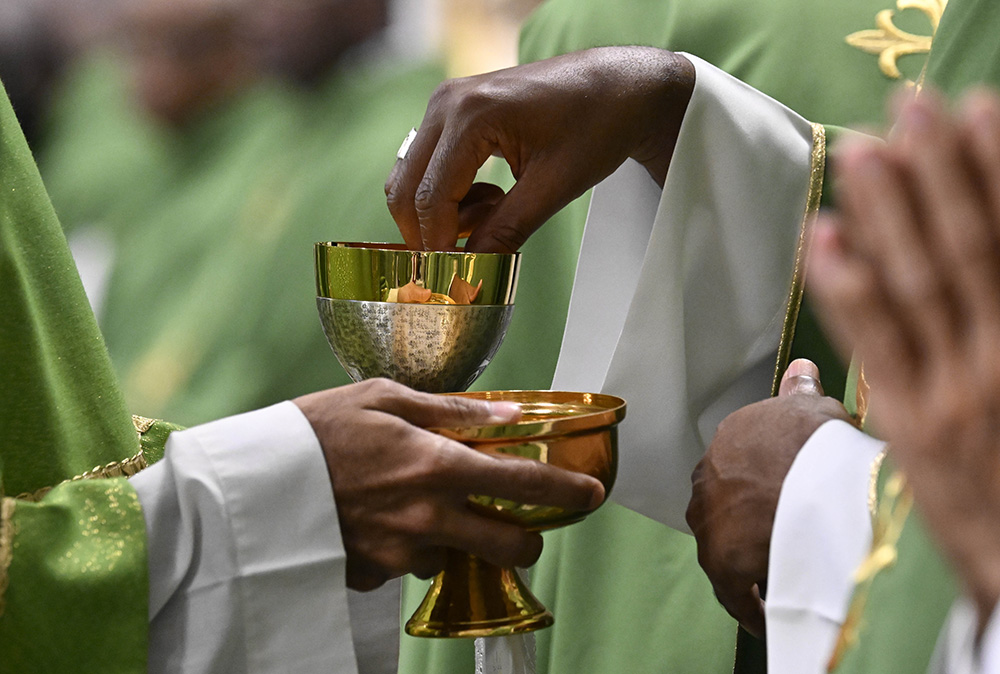
A concelebrating priest dips the host into consecrated wine during Mass in St. Peter's Basilica at the Vatican Oct. 29, marking the conclusion of the first session of the Synod of Bishops on synodality. (CNS/Vatican Media)

A concelebrating priest dips the host into consecrated wine during Mass in St. Peter's Basilica at the Vatican Oct. 29, marking the conclusion of the first session of the Synod of Bishops on synodality. (CNS/Vatican Media)

Though brief in its statement, it seems that the synod was at least open to some flexibility to reengage resigned priests in some active ministerial capacity. It states: "On a case-by-case basis, and in accordance with the context, the possibility should be considered of re-inserting priests who have left the ministry in pastoral services that recognize their formation and experience." And why not to preside at Eucharist?

Some possibility of shared Eucharist

In many cultures, marriage between Catholics and people from other Christian traditions is very common. Non-Catholic Christians are currently "prohibited by law" (Canon 912) from receiving the Eucharist. But might it be pastorally wise to welcome to the table Christian partners whose faith affirms the "real presence" of the risen Christ? 

Without offering a decision, the synod appeared to be open to this possibility. It states: "We need to examine the issue of Eucharistic hospitality ... from theological, canonical and pastoral perspectives. ... This issue is of particular importance to inter-church couples."

An afterthought

The dominant scholarly opinion now is that admitting women to the diaconate would "restore the practice of the Early Church" and thus would be "faithful to the tradition." Theological logic suggests that they be admitted to priesthood and episcopacy as well. Note that we have always spoken of "holy orders" (plural) and yet have counted seven rather than nine sacraments.

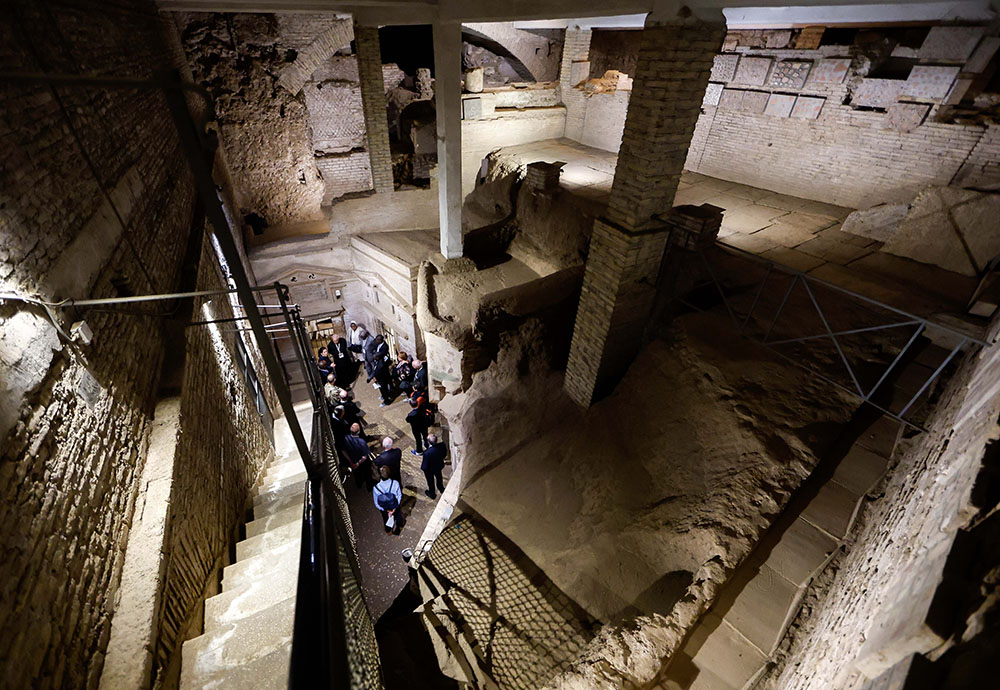
Participants in the assembly of the Synod of Bishops walk through the ancient Catacombs of St. Sebastian in Rome after praying at the Basilica of St. Sebastian as part of a pilgrimage Oct. 12. (CNS/Lola Gomez)

Participants in the assembly of the Synod of Bishops walk through the ancient Catacombs of St. Sebastian in Rome after praying at the Basilica of St. Sebastian as part of a pilgrimage Oct. 12. (CNS/Lola Gomez)

In other words, these three orders are all mediations of one and the same sacramental grace, albeit each ordered for three particular functions of service to the Christian community. 

Sadly, the synod doesn't even mention this logical possibility regarding women in priesthood and episcopacy. Perhaps in the interest of first reaching wider pastoral consensus, this synod gathering thought it wise to "take one step at a time." Yet while waiting for women to be admitted to all three holy orders, it seems appropriate to cry out with the psalmist, "How long, oh God, how long?"

On a personal note, it may surprise that I was confirmed in my conviction that women be admitted to all three holy orders from my repeated praying of the Hail Mary (which I do 50 times a night — unless I fall asleep first). As I meditated on "Holy Mary, Mother of God," I began to recognize that Mary was the first to mediate the "body and blood" presence of God in human history with the conception and birth of Jesus. 

Recognizing this theotokos role of Mary in the work of our salvation — as Mother of God — I became all the more convinced that no sacramental function can be validly denied to women. And as long as we deny their full inclusion in all orders of ministry we are well advised to ask Mary to "pray for us sinners."

This story appears in the Synod on Synodalityfeature series. View the full series.
Imagine Synod 2024 with Women Priests at the table in Rome presenting theologies and ministries in a Church for everyone 

People’s Catholic Seminary presents Three Forums on the Journey Together in a Church for Everyone: Next Steps in a Synodal Church. 


Join us for three sessions of mutual listening and sincere dialogue to continue  exploring possible paths ahead on the journey together in a Synodal Church.


Session 1: Tuesday, January 16, 2024

1pm-2pm ET: 

8:00pm-9:00pm ET

Topic: The Face of the Synodal Church on the Road Together


Session 2 Tuesday, February 6, 2024 

1pm-2pm ET

8pm-9:00pm ET

Topic: All Disciples, All Missionaries


Session 3: Tuesday March 12, 2024 

Topic: Weaving Bonds, Building Communities

1pm-2pm EDT

8pm-9:00pm EDT


Please let us know if you are attending: by sending a response to People’s Catholic Seminary at:

peoplescatholicseminary@gmail.com


Synthesis Report: https://pcseminaryforum.blogspot.com/2023/12/synod-synthesis-shows-agreement.html


Here is the Zoom link for every session:

https://us02web.zoom.us/j/84965259983?pwd=VFl1cWhjV2UvMGl1cWFyR05mU2xKQT09


Meeting ID: 849 6525 9983

Passcode: 868236


Call in for audio only: +1 305 224 1968 US


Saturday, December 16, 2023

People’s Catholic Seminary presents Three Forums on the Journey Together in a Synodal Church for Everyone: Next Steps

Imagine Synod 2024 with Women Priests at the table in Rome presenting theologies and ministries in a Church for everyone 

People’s Catholic Seminary presents Three Forums on the Journey Together in a Church for Everyone: Next Steps in a Synodal Church. 


Join us for three sessions of mutual listening and sincere dialogue to continue  exploring possible paths ahead on the journey together in a Synodal Church.


Session 1: Tuesday, January 16, 2024

1pm-2pm ET: 

8:00pm-9:00pm ET

Topic: The Face of the Synodal Church on the Road Together


Session 2 Tuesday, February 6, 2024 

1pm-2pm ET

8pm-9:00pm ET

Topic: All Disciples, All Missionaries


Session 3: Tuesday March 12, 2024 

Topic: Weaving Bonds, Building Communities

1pm-2pm EDT

8pm-9:00pm EDT


Please let us know if you are attending: by sending a response to People’s Catholic Seminary at:

peoplescatholicseminary@gmail.com


Synthesis Report: https://pcseminaryforum.blogspot.com/2023/12/synod-synthesis-shows-agreement.html


Here is the Zoom link for every session:

https://us02web.zoom.us/j/84965259983?pwd=VFl1cWhjV2UvMGl1cWFyR05mU2xKQT09


Meeting ID: 849 6525 9983

Passcode: 868236


Call in for audio only: +1 305 224 1968 US


People’s Catholic Seminary’s Response to the Synthesis Report of SYNOD October 2023, A SYNODAL CHURCH IN MISSION

  A Journey to Spiritual Transformation, Empowerment and Equity ( Summary, see link to full report) Introduction The People’s Catholic Semin...